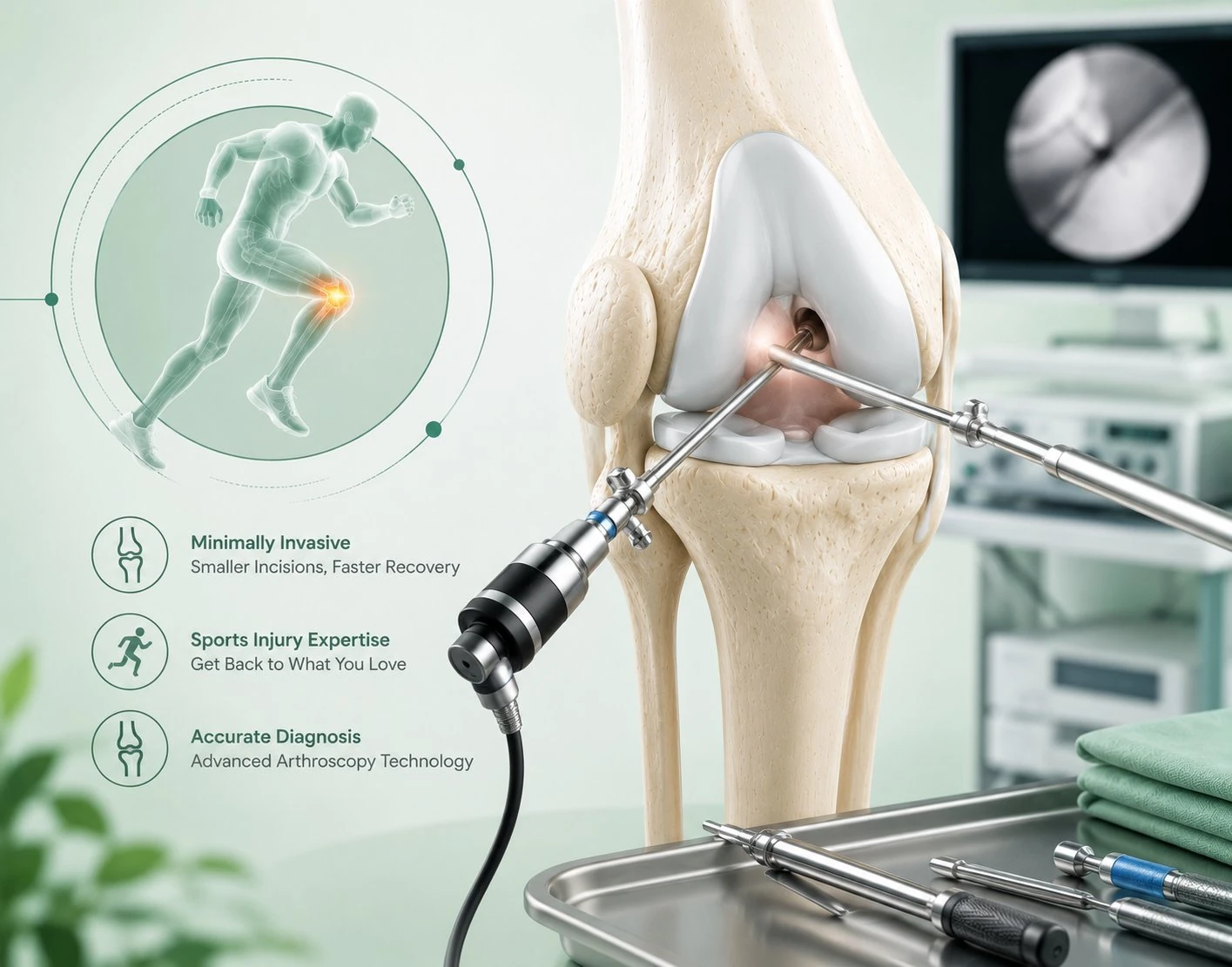
ACL Reconstruction Surgery in LucknowDr Hatif Siddiqui
ACL injuries are among the most common serious sports-related knee injuries, affecting athletes, runners, gym-goers and active individuals. A torn ACL can cause knee instability, weakness during activity and repeated episodes of the knee giving way.
The ACL, or anterior cruciate ligament, is one of the major stabilising ligaments inside the knee. It supports knee stability, balance during movement, rotational control and sports performance by preventing excessive movement of the shin bone relative to the thigh bone.
ACL injuries are common during football, cricket, basketball, running, gym activities, sudden twisting movements and road accidents. Many patients report hearing or feeling a pop at the time of injury.
Why ACL Injuries Should Not Be Ignored
Untreated ACL tears may lead to repeated instability, meniscus damage, cartilage injury, chronic knee pain, reduced athletic performance and early arthritis. Early evaluation and proper treatment help preserve long-term knee health and function.
ACL reconstruction surgery is a minimally invasive arthroscopic procedure used to replace the torn ligament with graft tissue. The damaged ACL usually cannot heal completely on its own in active individuals, so reconstruction restores stability and supports safe return to activity.
The surgery is performed arthroscopically using tiny incisions, high-definition camera systems and precision instruments.
ACL Surgery Expertise
ACL reconstruction surgery
Arthroscopic knee surgery
Sports injury treatment
Meniscus repair
Ligament injury management
Knee instability treatment
Sports trauma surgery
Why Patients Choose Dr Hatif Siddiqui for ACL Surgery
ACL reconstruction requires precise surgical technique and structured rehabilitation planning. Dr Hatif is trusted for advanced arthroscopic expertise, fellowship training in sports trauma from London, athlete-focused rehabilitation, minimally invasive surgery, detailed recovery planning and ethical recommendations.
Fellowship training in sports trauma
Advanced arthroscopic expertise
Athlete-focused rehabilitation planning
Modern minimally invasive surgery
Ethical treatment advice
Strong focus on long-term recovery
Advanced Arthroscopic ACL Reconstruction
Arthroscopy allows the surgeon to visualise the inside of the knee joint with high precision. Compared to open surgery, arthroscopic ACL reconstruction offers minimal tissue damage, smaller scars, less postoperative pain, faster rehabilitation, reduced hospital stay and better cosmetic healing.
Smaller cuts
Faster recovery
Less pain
Reduced scarring
Early rehabilitation
Minimal tissue trauma
Who May Need ACL Reconstruction?
Surgery may be recommended for athletes, young active individuals, patients with knee instability, recurrent knee giving way, combined ligament injuries, meniscus injuries and patients who want to return to sports.
Not every ACL tear immediately requires surgery. Treatment depends on activity level, age, knee stability, lifestyle demands and associated injuries.
Conservative Treatment vs ACL Surgery
Partial tears or low physical demands may improve with physiotherapy, strengthening, bracing and activity modification. Surgery is often recommended for complete tears, persistent instability, sports participation, active lifestyles and recurrent knee buckling.
Associated Injuries Commonly Seen with ACL Tears
Meniscus tears
Cartilage damage
Bone bruising
Other ligament injuries
Dr Hatif carefully evaluates and manages associated injuries during arthroscopic surgery to improve long-term outcomes.
Dr Hatif Siddiqui’s ACL Treatment Approach
Detailed Knee Evaluation
Every patient undergoes clinical examination, MRI analysis, stability testing, functional assessment and sports activity evaluation.
Precision Arthroscopic Surgery
Modern arthroscopic techniques allow accurate ligament reconstruction, better graft placement, joint preservation and reduced soft tissue trauma.
Structured Rehabilitation
Recovery focuses on range of motion, muscle strengthening, knee stability, balance training and gradual return to sports.
Recovery After ACL Reconstruction Surgery
Early Recovery
Most patients begin movement early, start physiotherapy soon and gradually improve walking confidence. Early rehabilitation helps prevent stiffness and improve recovery progression.
Return to Sports
Return-to-sport timelines depend on knee stability, muscle strength, rehabilitation progress and sport-specific demands. Safe protocols are essential to reduce reinjury risk.
Why Medanta Lucknow is Preferred for ACL Surgery
Dr Hatif Siddiqui performs advanced arthroscopic procedures at Medanta Hospital Lucknow, which offers arthroscopy systems, operation theatres, sports rehabilitation support, orthopaedic infrastructure and postoperative care.
Consultation Locations
Medanta Lucknow
OPD - B Wing, 2nd Floor, Medanta, Sector A, Pocket 1, Amar Shaheed Path, Golf City, Lucknow, Uttar Pradesh 226002
Indira Nagar Clinic
1D, near Khan Dairy Road, Block A, Indira Nagar, Lucknow, Uttar Pradesh 226016
Patient Reviews & Recovery Experiences
★★★★★
My grandfather underwent Right Total Knee Replacement surgery at Medanta Hospital under Dr Hatif Ji. It has been 21 days since surgery and his recovery has been smooth. His walking has improved significantly and we truly appreciate the professionalism, guidance and post-operative support.
Shakti Upadhyay
Google Review
★★★★★
Such a great doctor. Full of knowledge, experience and calmness. He gave maximum time to understand the problem and described everything about the problem and treatment with expertise.
Nischal Singhal
Local Guide Google Review
★★★★★
Dr Hatif Qamar Siddiqui is very experienced and well-trained in orthopedics. He is a real expert in his field, and is also very polite, humble and caring.
Waseem Siddiqui
Google Review
Frequently Asked Questions
Dr Hatif Siddiqui is recognised for advanced arthroscopic ACL reconstruction surgery and sports injury treatment in Lucknow.
Book Consultation for ACL Reconstruction Surgery in Lucknow
If knee instability, sports injury or ACL tear is affecting movement and confidence, early orthopaedic evaluation can help prevent worsening joint damage and improve long-term outcomes.