Osteoarthritis
The most common cause of hip arthritis, usually caused by gradual cartilage wear. Risk factors include age, obesity, previous injury, overuse and family history.
Early Diagnosis, Non-Surgical Care & Advanced Hip Joint Treatment
Persistent hip pain, stiffness, limping or difficulty walking may indicate hip arthritis or joint damage. Early orthopaedic evaluation can reduce pain, improve movement and help preserve the natural hip joint for longer whenever possible.
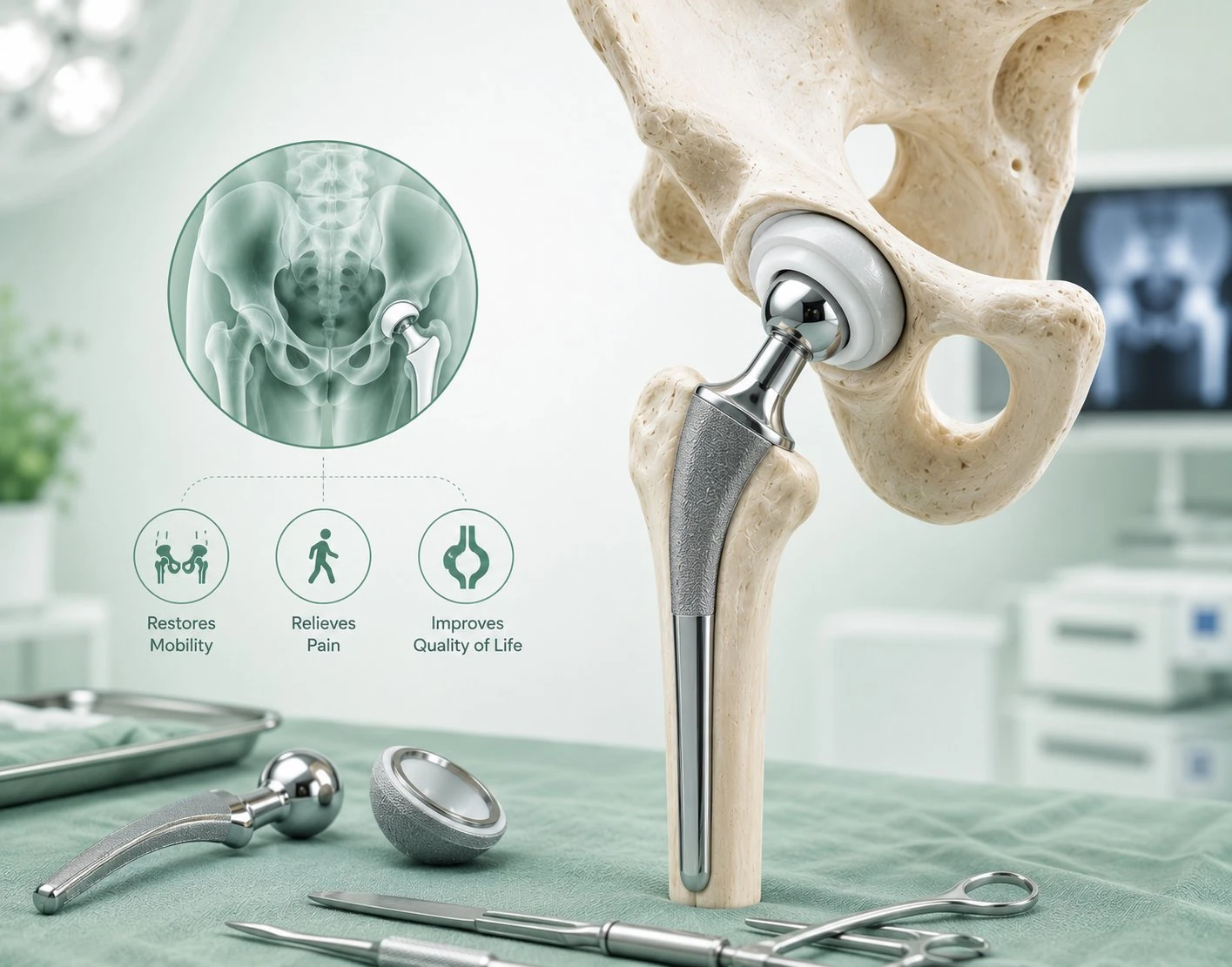
Hip Arthritis & Joint Preservation
Advanced orthopaedic care in Lucknow
Hip Diagnosis
Treatment First
Hip Replacement When Needed
Hip arthritis occurs when the smooth cartilage cushioning the hip joint gradually wears away or becomes damaged. Healthy cartilage allows smooth and painless motion. As arthritis progresses, joint surfaces become rough and inflamed, leading to pain, stiffness, reduced movement, limping and difficulty walking.
Many people initially mistake hip arthritis for back pain, weakness or temporary muscle strain. Deep groin pain that worsens with walking or activity is one of the most common warning signs that the hip joint itself needs evaluation.
Hip arthritis symptoms may develop slowly over months or years. Early evaluation helps identify the true cause of pain and may prevent worsening joint damage.
Learn when hip replacement becomes necessaryThe most common cause of hip arthritis, usually caused by gradual cartilage wear. Risk factors include age, obesity, previous injury, overuse and family history.
AVN occurs when blood supply to the hip bone reduces, causing bone damage and possible joint collapse. Early diagnosis is especially important.
An inflammatory autoimmune condition that can damage the hip joint over time, causing stiffness, pain and reduced mobility.
Previous hip fractures, sports injuries or trauma around the joint may gradually lead to chronic pain and arthritis progression.
Surgery is not the first step for every hip arthritis patient. Dr Hatif Siddiqui strongly emphasises conservative treatment whenever suitable, especially when arthritis is diagnosed early and the joint can still be preserved.
Medication may help reduce pain, inflammation and stiffness, but long-term self-medication should be avoided without proper diagnosis.
Structured rehabilitation improves flexibility, strengthens supporting muscles, improves walking mechanics and reduces stiffness.
Reducing excess body weight can decrease pressure on the hip joint, improve movement and slow symptom progression.
Patients are guided about joint-friendly exercise, sitting posture, daily movement habits and avoiding excessive joint strain.
Selected patients may benefit temporarily from injections to reduce pain and inflammation depending on arthritis severity.
The aim is to maintain mobility and delay surgery safely whenever the hip joint condition allows it.
Hip replacement surgery is considered only when pain becomes severe, walking is significantly affected, daily activities become difficult, conservative treatment stops helping and joint damage is advanced on evaluation.
The goal is always to preserve the natural hip joint safely for as long as possible before considering surgery.
Explore Hip Replacement SurgeryWhen hip arthritis becomes severe, robotic-assisted hip replacement may help improve implant positioning, surgical precision, joint alignment and recovery consistency.
Robotic Joint Replacement“Such a great doctor. Full of knowledge, experience and calmness. He gave maximum time to understand the problem and described everything about the problem and treatment with expertise.”
Nischal Singhal
Local Guide Google Review
Hospital OPD
OPD - B Wing, 2nd Floor, Medanta, Sector A, Pocket 1, Amar Shaheed Path, Golf City, Lucknow, Uttar Pradesh 226002
Second Consultation Clinic
1D, near Khan Dairy Road, Block A, Indira Nagar, Lucknow, Uttar Pradesh 226016
Common symptoms include groin pain, hip stiffness, limping, difficulty walking, difficulty sitting cross-legged and pain while standing up.
If hip pain, groin pain, stiffness or walking difficulty is affecting your mobility, early orthopaedic evaluation can help prevent worsening joint damage and improve long-term outcomes.