Emergency stabilisation
A pelvic binder or temporary external frame to hold the pelvis, together with treatment of bleeding and other injuries by the emergency and critical-care teams.
Complex Trauma
The pelvis is the ring of bones that connects the spine to the legs. The acetabulum is its hip socket. Fractures here usually follow high-energy injuries such as road accidents or falls from a height, although in older people with weak bones a simple fall can be enough.
These are among the most demanding fractures in orthopaedics. They can be life-threatening at first, and the hip socket must be rebuilt precisely to give the best chance of walking well again.
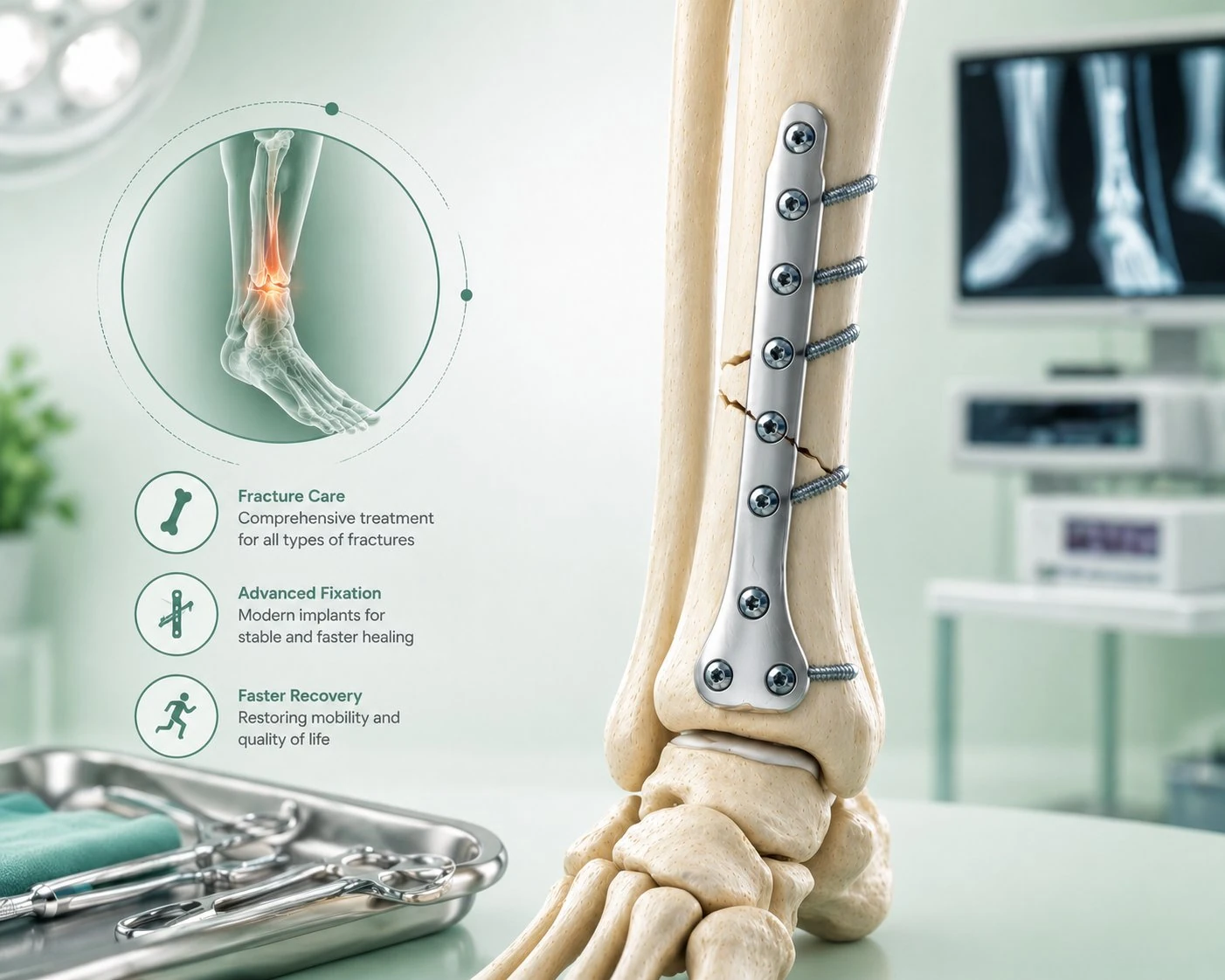
Complex Trauma & Fracture Surgery
Advanced orthopaedic care in Lucknow
Seek urgent care: Pelvic fractures after an accident can cause serious internal bleeding. Call 112 or go to the nearest emergency department immediately. Don't move the injured person more than necessary.
Pelvic ring fractures break the ring of bone. Stable fractures with little displacement can often heal without surgery. Unstable fractures can bleed heavily and need urgent stabilisation, followed by surgery to restore the ring.
Acetabular fractures break the hip socket itself. Because the socket carries body weight with every step, even a small step in its surface can lead to pain and early hip arthritis. Displaced acetabular fractures usually need surgery to put the socket back together.
Treatment is planned with X-rays and a CT scan, and depends on how stable the fracture is and how far the socket has moved.
A pelvic binder or temporary external frame to hold the pelvis, together with treatment of bleeding and other injuries by the emergency and critical-care teams.
Stable, minimally displaced fractures can often heal with pain relief, protected walking and physiotherapy, under close X-ray follow-up.
Plates and screws, sometimes placed through small cuts, restore the ring and allow earlier sitting and walking.
The fragments of the acetabulum are carefully put back in place and fixed with plates and screws to rebuild a smooth socket.
In some older patients with weak bone, or when the hip is badly damaged, a hip replacement may be the better option, either at the time or later.
| In hospital | Sitting up and moving in bed early. Walking with a walker, often without putting full weight on the injured side. |
|---|---|
| Up to 6–12 weeks | Protected weight bearing while the bone heals, with physiotherapy to keep the hip and knee moving. |
| 3–6 months | Weight bearing increases, and strengthening and walking training continue. |
| 6–12 months | Continued improvement in walking, stamina and hip function. |
Recovery varies with the fracture, other injuries and bone quality. Regular X-ray follow-up is important.
Medanta Lucknow
OPD - B Wing, 2nd Floor, Medanta, Sector A, Pocket 1, Amar Shaheed Path, Golf City, Lucknow, Uttar Pradesh 226002
Indira Nagar Clinic
1D, near Khan Dairy Road, Block A, Indira Nagar, Lucknow, Uttar Pradesh 226016
पेल्विस और कूल्हे के सॉकेट (एसिटाबुलम) का फ्रैक्चर अक्सर सड़क दुर्घटना या ऊँचाई से गिरने पर होता है। शुरुआत में इसमें अंदरूनी ख़ून बहना जानलेवा हो सकता है, इसलिए तुरंत इमरजेंसी में जाएँ। बाद में सॉकेट को सही तरह से जोड़ना ज़रूरी है, ताकि मरीज़ ठीक से चल सके। डॉ. हातिफ़ सिद्दीकी पेल्विक-एसिटाबुलर ट्रॉमा सर्जरी करते हैं।
It can be. Unstable pelvic fractures after high-energy injuries can cause heavy internal bleeding and need emergency care. Once the patient is stable, the fracture is assessed for surgery.
It is a fracture of the acetabulum, the socket of the hip joint. Because the socket carries body weight, displaced fractures usually need surgery to restore a smooth joint surface.
No. Stable fractures with little displacement often heal without surgery. Unstable pelvic ring fractures and displaced acetabular fractures usually need fixation.
Most patients start walking with a walker within days, but without putting full weight on the injured leg for about 6–12 weeks, until the X-rays show healing.
Yes, the risk is higher when the socket surface is not restored accurately. Precise reconstruction lowers the risk. If arthritis develops later, a hip replacement can be done.
Medanta Lucknow and the Indira Nagar clinic. Bring your X-ray, MRI or CT scan and any previous operation notes.